Ametek Article: 3D Scanners are invited to Quality Control
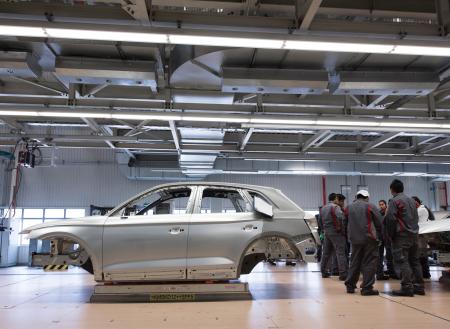
Products built in the automotive industry are made of hundreds of components manufactured by different suppliers who are based in diverse locations and use varied manufacturing processes. Once assembled, all of the components must fit together and align correctly to produce viable products free from defects that could distort their performance and ruin their efficiency.
If for example irregular gaps between a door and car body are reported by quality control, production is stopped, and quality assurance is called for inspection. Not only must they identify the root cause and fix quality problems accurately, but they must also deliver their diagnostic quickly, as production is waiting. Moreover, these inspections can occur on thousands of parts and products, all with different sizes, surface finishes, levels of complexity, and geometries.
Quality Control (QC)
The quality control and quality assurance processes must keep pace with the production capacity so that yield is not slowed (when samples are being inspected) and downtown is limited (when problems must be located on the line and fixed quickly). QC is essential to identify any inaccuracy that could compromise subsequent steps in the production line. In high volume production, sampling parts are brought to coordinate measurement machines (CMM) queue for inspection.
CMMs which are very accurate but take time to operate, must be handled by trained and experienced employees. Since this metrology equipment is difficult to access and generally overloaded by all kinds of tests and controls, bottlenecks are common and often lead to productivity issues, even if the inspected parts comply with the requirements. In short, production waits for the validation of the parts, which wait for the availability of the CMM.
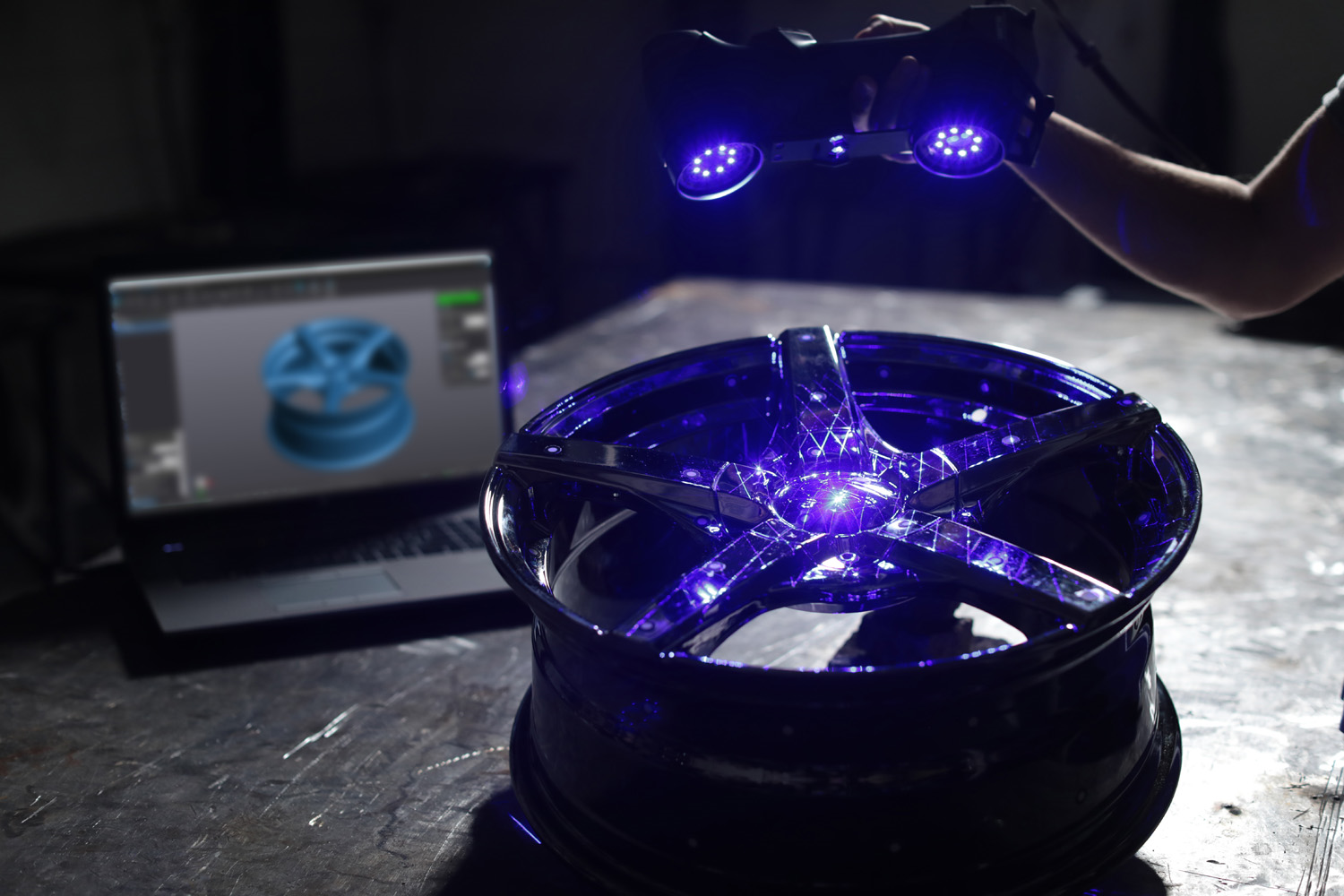
Portable 3D Scanners – An alternative Solution to the CMM and traditional measurement methods
To ensure product quality and improve diagnostics the automotive industry needs alternative measuring solutions that can provide quality professionals with accuracy, speed, portability, versatility, and simplicity.
3D measurements technologies, such as Creaform 3D scanners who are able to perform measurements with an accuracies of up to 0,025mm, are the solution for quality professionals in the automotive industry who want to fix quality issues and deliver approved quality parts quickly and efficiently.
By adding a metrology-grade 3D scanner to existing measurement solutions, delicate inspections of high-tolerance features can be assigned strictly to the coordinate measuring machine (CMM) or other traditional measurement methods, while all remaining controls can be redirected to 3D scanners. This action not only ensures product quality through the supply chain, but also improves diagnostics on reported quality issues and accelerates FAIs in a context of limited resources and strict requirements.
TÜV AUSTRIA AUTOMOTIVE GMBH is for example using the HandySCAN 3D scanner in conjunction with the software VXelements and Geomagic Design X for the most diverse measurement tasks, mainly in the workshop. In addition to measuring the circumferential clearance in the wheel arches on full lock, the 3D scanner is also used for measuring wheel rims, footwells, trunks, RDKS sensors, engine compartments, and deviations in replacement components. In the future, the 3D scanner will also be used for assessing damage caused by hail on body parts.
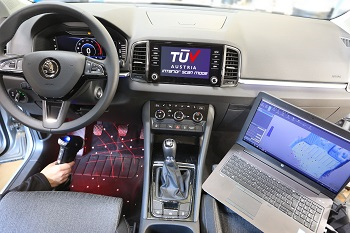
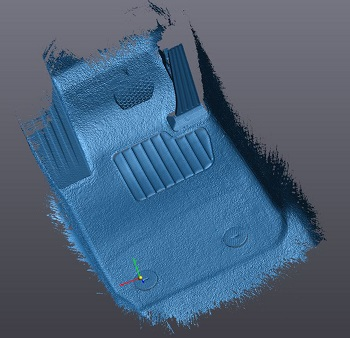
The purchase of HandySCAN 3D has paid for itself within a short period of time. Previously, two employees had to operate the measuring system, whereas only one operator is now needed for the 3D scanner. Risks, which become clear in the FMEA analysis, could be considerably reduced by using the 3D scanner. The data can be tracked clearly and verified better, meaning that the majority of direct and indirect error costs will be avoided in the future.